

Capture the whole process
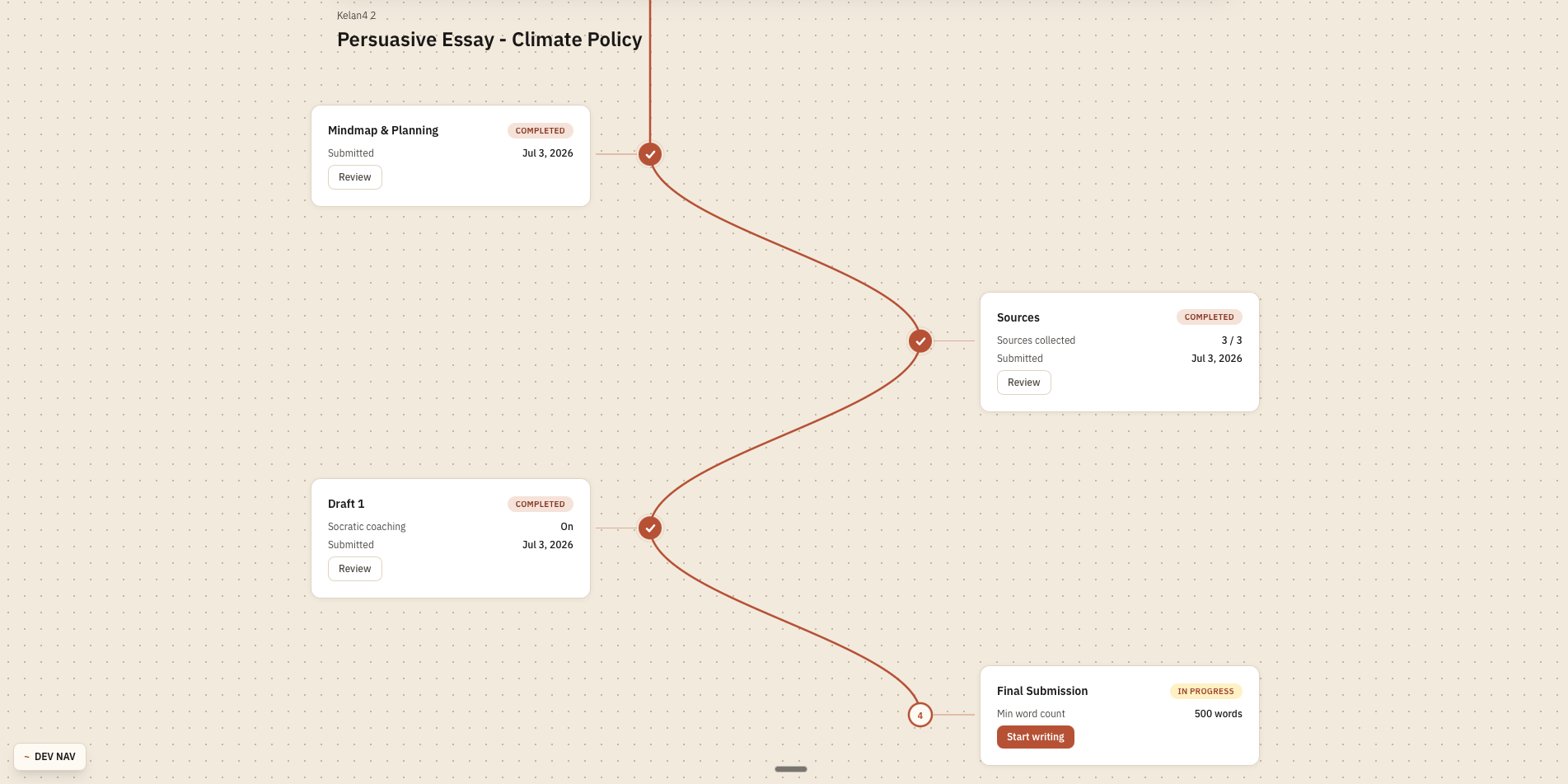
Planning, sources, mind maps, drafts, and revisions are saved as students work.
CreativeTrail captures the whole journey behind an essay: planning, sources, mind maps, drafting, revision, and reflection. Students build real authorship confidence. Teachers finally see how the work came to be.
More than an AI detector: a constructive view of how writing actually happens.
One essay · the whole writing journey, captured
A classroom writing tool that records the journey behind every essay, turning invisible effort into evidence everyone can trust.
Planning, sources, mind maps, drafts, and revisions are saved as students work.

Students see the real thinking behind their writing, so they can stand behind their work and grow as writers along the way.
Engagement, revision behavior, and source use add up to a clear, fair picture of how each essay actually came to be.
The same essay tells two very different stories depending on how much of the work you can actually see.
You judge the last page and hope for the best.
You see exactly how the work came to be, and so does the student.
How it works
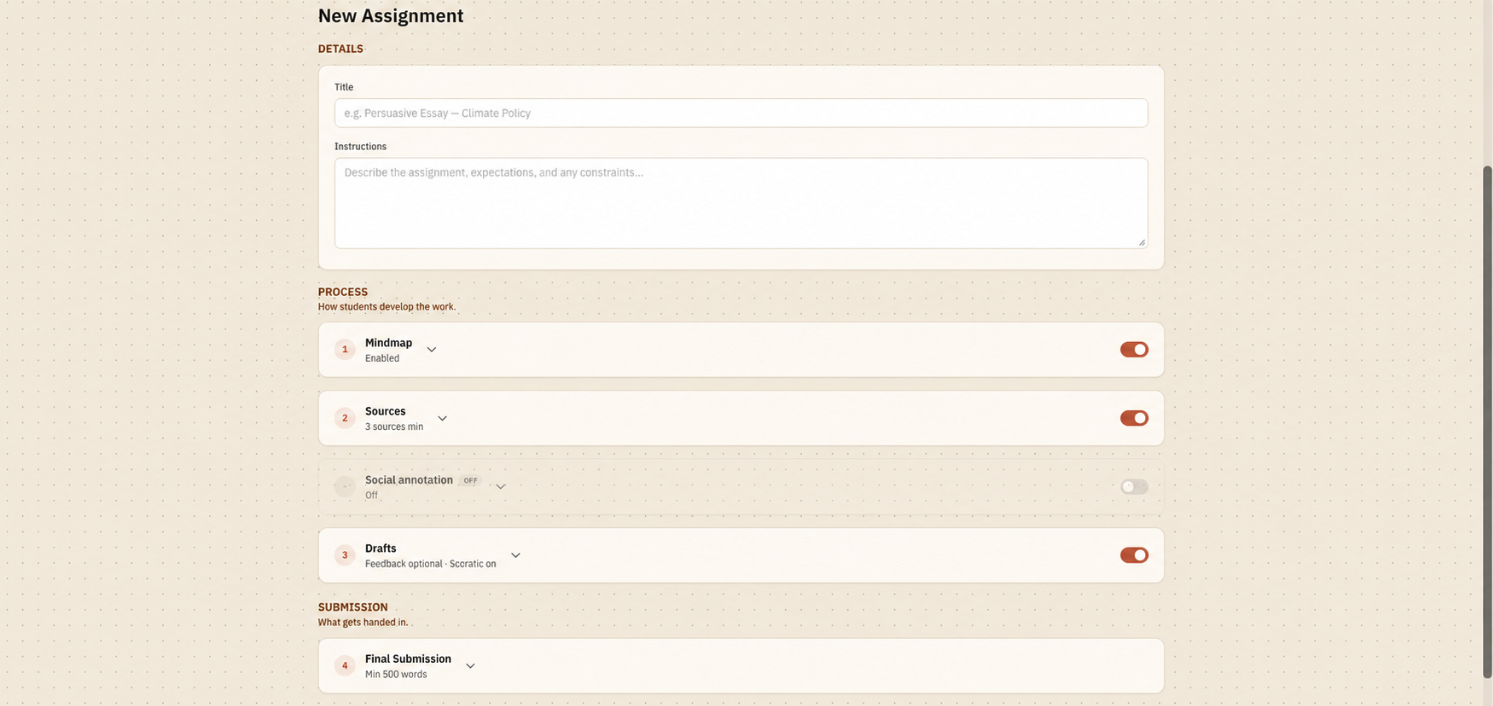
Every phase is a toggle: mind maps, sources, drafts, peer review, reflection prompts. Turn everything on for a research paper, or keep it light for a personal essay. Setup takes about two minutes.
Reflection
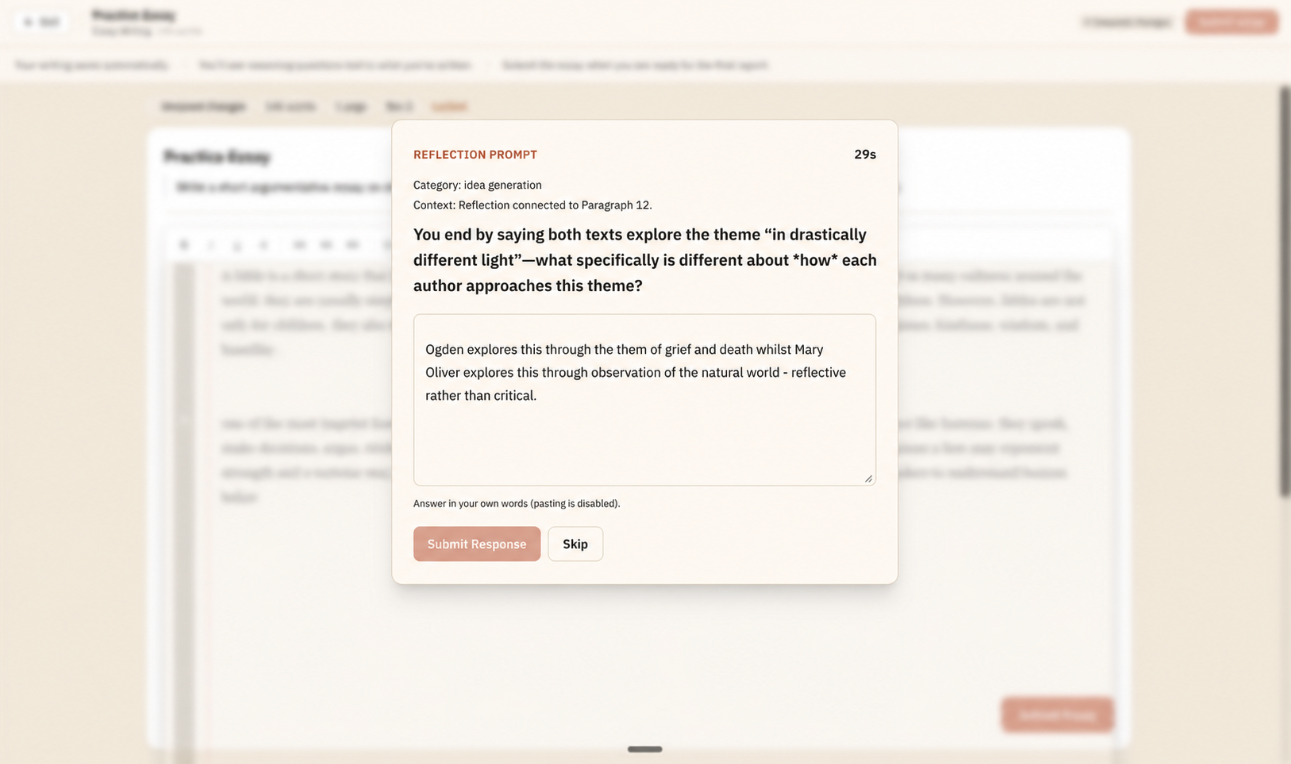
While students draft, CreativeTrail poses the questions a good teacher would, at the moment the thinking happens, while there's still time to act on the answer. Students explain their reasoning in their own words, and every reflection becomes part of the trail.
Based on science
CreativeTrail's process signals come from peer-reviewed writing research, including methods behind the KLiCKe corpus of ~5,000 essays, and a published study that distinguished authentic writing from transcribed, pasted-in text with 99% accuracy. We don't use the research to issue verdicts. We use it to organize evidence for yours.
In the classroom
We're putting CreativeTrail through independent research before we ask you to trust it.
A quarter-long study in a live university writing course, beginning fall 2026.
Fall 2026
Faculty and students testing real assignment workflows and sharing structured feedback.
Fall 2026
The next waypoint on the trail.
Students can always see their own trail: the same evidence their teacher sees.
Never sold. Never used to train outside AI models.
Our privacy policy, terms of use, and district-ready student-data addendum are published in full, with retention, deletion, and subprocessors included.
Give your teachers evidence of how the work developed (planning, sources, drafting, revision, and reflection) so authorship decisions rest on the process, not a guess about the final page.
Student names encrypted in the browser · No ads, no selling student data · District-ready data addendum